
Water Damage Restoration Cost in Colorado (2026)
Last updated: July 9, 2026 — reviewed against current Front Range pricing
Water actively leaking right now? Don’t price-shop mid-flood — call (720) 605-6466 first and read later. Every hour of standing water adds to the bill.
Quick answer: Most Colorado water damage restoration jobs cost $1,500–$8,000, with an average around $2,500–$3,000. Denver-area rates run about 29% below the national average. Your price depends on three things: water type (clean vs. contaminated), square footage affected, and how fast drying starts.
Ranges based on published national cost data (Angi, HomeAdvisor) cross-checked against Front Range provider pricing. Updated July 2026.
Colorado’s climate adds its own pressure — freeze-thaw burst pipes in winter and spring snowmelt flooding are among the most common local causes. Professional water damage restoration is priced per the IICRC S500 standard — the industry benchmark — which is why a proper quote always starts with a category and class assessment, not a flat rate. Need emergency water removal? Crews respond 24/7.
Jump to: Cost tables · Drying class · Cost by city · Denver job costs · Cost of waiting · Insurance · FAQ
How much does water damage restoration cost in Colorado?
Most Colorado homeowners pay between $1,500 and $8,000 for professional water damage restoration, with the Denver-metro average landing near $2,500–$2,750. Costs run roughly $3 to $7.50 per square foot, though Denver-area rates tend to sit toward the lower half of that band — about 29% below the national average according to published Denver cost data. Severe, multi-level flooding can push totals past $10,000, and worst-case structural jobs can reach $25,000 or more.
Water damage cost is a function of severity, not a sticker price. A single-room clean-water leak caught early sits at the bottom of the range. A category-3 sewage backup soaking a finished basement sits at the top. The numbers below show where the typical job lands and what moves it up or down.
| Severity | What it looks like | Typical cost |
|---|---|---|
| Minor (single room, clean water, caught early) | One room, surface drying, minimal material loss | $1,200 – $5,000 |
| Moderate (multiple rooms or contaminated water) | Several rooms, some material removal, sanitization | $5,000 – $8,000 |
| Severe (widespread or multi-level flooding) | Basement or whole-floor flooding, structural drying, rebuild | $10,000+ |
Cost by water category (IICRC Category 1, 2, 3)
The IICRC S500 standard classifies water into three categories, and the category is the single biggest driver of cost. Category 1 (clean water) from a supply line or rainwater is the cheapest to restore; a contained single-room job typically runs $1,200–$5,500. Category 2 (gray water) from appliance overflows carries contaminants and costs more because porous materials often have to be removed and the area sanitized rather than simply dried. Category 3 (black water) from sewage backups or floodwater is the most expensive — it requires hazmat-grade handling, full removal of affected porous materials, and intensive disinfection, regularly landing at the upper end of any range and beyond.
| Category | Source examples | Cost driver | Typical cost (contained area) |
|---|---|---|---|
| Category 1 — Clean | Supply-line leak, rainwater, melting snow | Extraction + structural drying | $1,200 – $5,500 |
| Category 2 — Gray | Dishwasher/washing-machine overflow, sump pump failure | Added sanitization, some material removal | Higher than Cat 1 |
| Category 3 — Black | Sewage backup, river/flood water, toilet overflow w/ waste | Hazmat protocols, full material removal, disinfection | Highest — often $5,000–$10,000+ |
A typical Category 1 job breaks down roughly into: water extraction $300–$1,000 (by volume), structural drying equipment and monitoring $500–$2,500, minor material replacement $200–$1,000, and professional moisture verification $200–$500.
Cost by drying class (IICRC Class 1–4)
Water category measures contamination; drying class measures how much water soaked in and how hard it is to get out. Both set the price — a clean-water Class 4 job can cost more than a gray-water Class 1 job. Estimators assign both numbers during the initial assessment.
| Drying class | What it means | Typical drying time | Typical cost impact |
|---|---|---|---|
| Class 1 | Part of one room; minimal absorption, mostly hard surfaces | 2–3 days | Baseline — around $3.75 per sq ft |
| Class 2 | Entire room; carpet and pad wet, water wicked up to 24" on walls | 3–5 days | ≈ $4.50 per sq ft |
| Class 3 | Overhead source; walls, ceiling, insulation, and subfloor saturated | 5–7 days | ≈ $6.25 per sq ft |
| Class 4 | Bound water in hardwood, plaster, brick, or concrete; specialty drying setups | 7+ days | $7.00+ per sq ft — highest equipment cost |
Not sure which category your water damage is? Describe it over the phone in 60 seconds and get a realistic cost range. Free, no pressure — a live person answers 24/7.
Cost by affected area
Where the water lands matters almost as much as how much there is. Basements are the most expensive area to restore in Colorado because so many Front Range homes have finished basements full of water-retaining materials — drywall, insulation, carpet, and pad — that must be removed rather than dried. A flooded basement commonly runs $2,000 to $10,000 or more depending on finish level. A single contained room sits at the low end; whole-home or multi-level events sit well above it.
| Area affected | Typical cost |
|---|---|
| Single room (minor, clean water) | $1,200 – $5,000 |
| Multiple rooms (moderate) | $5,000 – $8,000 |
| Basement (finished vs. unfinished) | $2,000 – $10,000+ |
| Whole home / multi-level flooding | $10,000 – $25,000+ |
Flooded basement? The faster water is extracted, the lower your final bill. Even if you don’t hire us, calling now to ask what to shut off and how to document the damage is free.
Cost by repair item
Once the structure is dried, material replacement is its own line item. Water-damaged drywall typically costs $500–$2,500 to repair depending on how much must be cut out. Ceiling water damage runs about $45–$55 per square foot, or roughly $300–$1,600 per repair. Hardwood flooring is the priciest common item — $8–$25 per square foot to replace, or $3–$8 per square foot to refinish if the boards can be saved, plus $500–$1,000 if the subfloor is affected. These are national figures that apply to Colorado jobs; labor in the Denver metro runs about $70–$200 per hour for IICRC-certified technicians, with after-hours emergency response adding $50–$200.
| Repair item | Typical cost |
|---|---|
| Drywall (water damage) | $500 – $2,500 |
| Ceiling (water damage) | $45 – $55 / sq ft (≈ $300 – $1,600 per repair) |
| Hardwood flooring — refinish | $3 – $8 / sq ft |
| Hardwood flooring — replace | $8 – $25 / sq ft |
| Subfloor repair | + $500 – $1,000 |
| Roof leak repair | $400 – $1,700 |
| Structural / load-bearing repair | $5,000 – $15,000 |
| IICRC-certified labor | $70 – $200 / hr (+ $50–$200 after-hours) |
What the line items on your estimate mean
A proper IICRC S500 estimate is itemized. These are the typical rates behind each line, so you can read a quote line by line and spot padding:
| Line item | Typical rate |
|---|---|
| Crew labor | $70 – $150 per hour |
| Truck-mounted water extraction | $100 – $300 per room |
| Air mover (drying fan) | $25 – $75 per day each; jobs typically run 5–20 units |
| Commercial dehumidifier | $50 – $150 per day |
| Antimicrobial application | $0.50 – $1.50 per sq ft |
| Moisture monitoring visit | $50 – $150 per visit (often bundled) |
| Contents pack-out & storage | $500 – $2,500 |
Water damage restoration cost by Colorado city
Restoration prices across Colorado’s Front Range cities sit on a similar baseline because they share a labor market, generally $1,500–$8,000 for a standard job. The bigger swings come from local housing stock and climate rather than the city name. Boulder tends to run highest, driven by higher home values, older housing, and high-altitude freeze-thaw damage; Denver’s large contractor pool keeps standard jobs competitive; northern markets like Greeley generally run a little lower.
| City | Typical range | Local cost factor |
|---|---|---|
| Denver | $1,200 – $7,500 | Large metro labor pool keeps standard jobs competitive; high basement prevalence raises flood-job costs |
| Aurora | $1,500 – $7,500 | Denver-metro rates; newer suburban homes with finished basements |
| Boulder | $1,500 – $10,000+ | Higher home values, older housing stock, and high-altitude freeze-thaw push costs to the upper end |
| Lakewood | $1,500 – $7,500 | Denver-metro rates; older West-metro homes can mean dated plumbing |
| Longmont | $1,500 – $8,000 | Front Range rates; 2013-flood-zone properties carry added flood risk |
| Fort Collins | $1,500 – $8,000 | Northern Front Range; student-rental density and snowmelt-season pipe bursts |
| Greeley | $1,200 – $7,000 | Generally lower-cost northern market; agricultural-area sewage/groundwater backups |
Ranges reflect Denver-metro and Front Range market data; city-to-city differences are smaller than the difference between a minor leak and a major flood. Severity, water category, and response time drive your actual cost more than your city.
Denver water damage restoration cost by job type
Denver-metro rates run roughly 29% below the national average thanks to a deep contractor pool, but the job type moves the number more than the ZIP code. Typical all-in ranges for the most common Denver water damage restoration calls:
| Job type | Typical Denver range | Notes |
|---|---|---|
| Frozen / burst pipe cleanup | $1,000 – $4,000 | Plus plumbing repair ($150–$2,000); most common December–February |
| Appliance failure (water heater, washer) | $800 – $3,000 | Usually Category 1; fast response keeps it at the low end |
| Sewage backup | $2,000 – $10,000 | Category 3 — containment, disposal, and antimicrobial required |
| Finished basement flood | $2,500 – $10,000+ | Drywall, carpet pad, and insulation usually replaced, not dried |
| Roof / ice dam leak | $1,200 – $5,000 | Often Class 3 (overhead saturation); wet attic insulation adds cost |
| Sump pump failure | $1,500 – $7,000 | Peaks with spring snowmelt; ask your insurer about backup-pump credits |
What makes Colorado water damage cost more (or less)
In Colorado specifically, a handful of local conditions push restoration costs around. Winter freeze-thaw cycles burst pipes — the single most common cold-season cause along the Front Range. Spring snowmelt and sudden summer storms drive basement and ground-level flooding. The region’s high share of finished basements means flood jobs more often involve full material removal. And areas with a flood history, such as the 2013 Front Range floods, can carry added risk and cost. The factors that lower your bill are within your control: fast extraction, early mold prevention (mold can begin within 24–48 hours), and prompt insurance documentation.
Acting fast is the biggest lever on price. Every hour standing water sits in a structure raises the odds of secondary damage — mold, swollen subfloor, compromised drywall — that turns a $2,000 job into a $10,000 one.
What waiting costs: the 48-hour clock
Restoration is priced partly by time. Category 1 water can degrade to Category 2 within 48 hours, mold can germinate within 24–48 hours, and drying costs rise with saturation depth. Here is how the bill grows as the clock runs:
| Time since water event | What happens | Cost impact |
|---|---|---|
| 0–24 hours | Extraction and structural drying only; most materials salvageable | Baseline |
| 24–48 hours | Mold spores begin germinating in damp materials; clean water starts degrading | + antimicrobial treatment ($500–$3,000) |
| 2–7 days | Category 1 degrades toward Category 2; carpet pad, drywall, and trim swell | +30–50% — more tear-out, longer drying |
| 7+ days | Established mold colonies; moisture wicks into framing and subfloor | + full mold remediation ($1,100–$3,400+) plus rebuild |
How to keep your restoration bill down
- Stop the water and cut power to the affected area at the breaker before anything else.
- Call within the first few hours. Category and class — the two numbers that set your price — are determined by time as much as by the source.
- Photograph and video everything before touching it. Claim documentation is worth thousands.
- Move contents out of wet rooms — contents pack-out is a billable line item you can reduce yourself.
- Don’t aim household fans at soaked drywall. Surface drying hides trapped moisture and can turn a drying job into a mold job.
- Ask for an itemized IICRC S500 estimate: extraction, drying days, equipment counts, and demolition scope should each be line items.
- Talk to your insurer before DIY demolition — unauthorized tear-out can void coverage.
Does insurance cover water damage restoration in Colorado?
Most Colorado homeowners’ policies cover sudden, accidental water damage — a burst pipe or an appliance failure — but typically exclude gradual leaks, poor maintenance, and natural flooding (which needs separate flood insurance). Before restoration begins, contact your insurer; they will usually want a professional assessment to determine the category and scope so they can confirm what’s covered. A reputable restoration company documents moisture readings and damage with photos to support the claim.
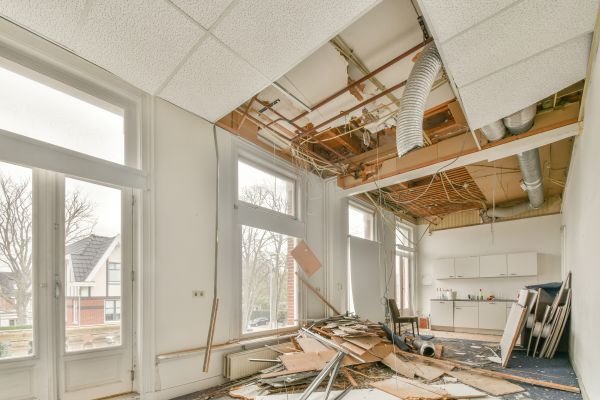
Unsure if your damage is covered? We photograph, moisture-map, and document damage the way insurance adjusters expect to see it — and we can walk you through the claim process. Free, no obligation.
How the restoration process works
Professional water damage restoration follows the IICRC S500 standard in a set sequence: inspect and classify the water, extract standing water, dry and dehumidify the structure, clean and sanitize, then repair and restore. Proper drying is verified with moisture meters, not guesswork — skipping it is the most common cause of post-restoration mold.
- Inspection & water classification — identify the source and category (1, 2, or 3).
- Water extraction — remove standing water with truck-mounted or portable extractors.
- Drying & dehumidification — air movers and dehumidifiers bring materials back to dry standard.
- Cleaning & sanitizing — antimicrobial treatment, especially for Category 2/3.
- Moisture verification — confirm the structure is dry before closing up.
- Repair & restoration — replace drywall, flooring, and finishes.
Frequently asked questions
How much does emergency water damage cleanup cost per hour of delay?
There’s no per-hour rate, but delay raises cost categorically: clean water left 48+ hours can be reclassified as gray water, and mold growth can begin within 24–48 hours — each adds remediation cost. If water is standing now, calling immediately is the cheapest decision you’ll make.
Will insurance pay for water damage restoration in Colorado?
Usually yes for sudden, accidental events (burst pipe, appliance failure); no for gradual leaks or outside flooding, which needs separate flood insurance. Coverage hinges on documentation — call before you start cleanup so damage is recorded properly.
Is $3,000 a fair price for water damage restoration?
For a mid-size clean-water job in the Denver metro, yes — that sits inside the typical $2,500–$3,000 average. Get a specific range for your situation with a quick phone assessment.
Can I just dry it out myself with fans?
For a small clean-water spill on hard flooring, sometimes. But household fans can’t dry inside walls or under flooring — trapped moisture is what causes mold and structural damage weeks later. If drywall, carpet pad, or subfloor got wet, get a professional moisture reading or emergency water removal.
How fast does mold grow after water damage?
Mold can begin growing within 24–48 hours in damp conditions — that’s why restoration pros treat the first day as the critical window. If it’s already visible, see our mold remediation service.
Does calling for an assessment cost anything?
No — assessments and phone estimates are free with no obligation. You’ll get a realistic range before anyone touches your home.
Will filing a water damage claim raise my premiums?
It can, which is why it’s worth knowing the likely restoration cost first — some smaller jobs cost less than a deductible plus premium impact. A free estimate helps you decide before you file.
Sources & methodology
This guide aggregates current published cost data for Colorado and the Denver metro from industry cost guides and restoration providers, including Angi, HomeAdvisor, NuBilt, Kinder Restoration, All Pro Restoration, and Accountable Home Services (2025–2026 data). Figures are typical ranges for planning only and are not a quote. Costs are framed against the IICRC S500 Standard for Professional Water Damage Restoration. Last verified: [DATE].
For a number specific to your home, a free phone assessment takes about five minutes — call (720) 605-6466.